3 Things CISOs Must Do Now to Start Their Quantum Safe Journey
A shoutout for CISOs preparing for the quantum threat and the 2030–2031 regulatory deadlines
The Takeaway
Every major regulator has now set hard deadlines for post‑quantum cryptography (PQC): 2030 for key establishment and 2031 for digital signatures across high‑value systems. But the real danger—harvest‑now, decrypt‑later (HNDL)—is happening today. CISOs cannot wait for multi‑year migration programs to mature. Three actions must begin immediately and simultaneously:
- Update procurement policies to require quantum‑safe capabilities.
- Prioritize protection against HNDL attacks for high‑value data in transit.
- Start cryptographic discovery using automated tools.
We discuss in more details below with timelines, regulatory references, and practical guidance.
Why CISOs Must Act Before the 2030–2031 Deadlines
Quantum computing is no longer a distant research milestone. Governments worldwide have moved from advisory guidance to binding mandates. In June 2026, the White House issued Executive Order 14412, requiring federal civilian agencies to migrate high‑value assets to PQC for key establishment by December 31, 2030 and for digital signatures by December 31, 2031 . Contractors and critical‑infrastructure operators are also pulled into this timeline through procurement rules and FAR updates.
These deadlines matter—but they are not the start of the risk. They are the last possible moment to close a door that is already open. Adversaries are believed to be collecting encrypted data today, intending to decrypt it once large‑scale quantum computers exist. This is the harvest‑now, decrypt‑later threat, explicitly cited in the executive orders .
For CISOs, the question is no longer “Should we prepare?” but “How do we start?” Here are the three foundational actions that every organization must begin in parallel.
1. Update Procurement Policies to Require Quantum‑Safe Capabilities
Make PQC a mandatory requirement for every new product, service, and renewal
The fastest way to accelerate your organization’s quantum‑safe posture is to force the supply chain to modernize. The 2026 executive orders explicitly tie PQC adoption to procurement, requiring federal contractors to comply with NIST PQC standards by 2030. Even if your organization is not a federal contractor, these rules will cascade across the global vendor ecosystem.
CISOs should update procurement policies to require:
- Quantum‑safe capability disclosures Vendors must list which components already support PQC (e.g., ML‑KEM, ML‑DSA, SLH‑DSA).
- Cryptographic deficiency roadmaps Vendors must identify remaining RSA/ECC dependencies and provide timelines for remediation.
- A Cryptographic Bill of Materials (CBOM) The executive orders direct CISA and NIST to publish minimum CBOM requirements, enabling automated assessment of cryptographic assets inside any product .
This shifts the burden from your internal teams to your vendors—where much of the cryptographic complexity actually resides.
Proposed Timeline
- 2026–2027: Update procurement policies; require PQC roadmaps and CBOMs.
- 2027–2028: Begin rejecting proposals that lack PQC readiness.
- 2029–2030: All new procurements must be PQC‑compliant; legacy systems scheduled for replacement.
2. Prioritize Harvest‑Now, Decrypt‑Later Protection for High‑Value Data
Upgrade TLS and IPsec now—confidentiality cannot wait until 2030
The most urgent quantum‑safe upgrade is protecting data in transit, especially high‑value or long‑lived data. The executive orders emphasize that confidentiality risks are already underway: encrypted traffic captured today can be decrypted later once quantum computers mature .
CISOs should immediately prioritize:
- Upgrading TLS connections to support RFC 10024 (Hybrid key establishment combining classical and PQC algorithms.)
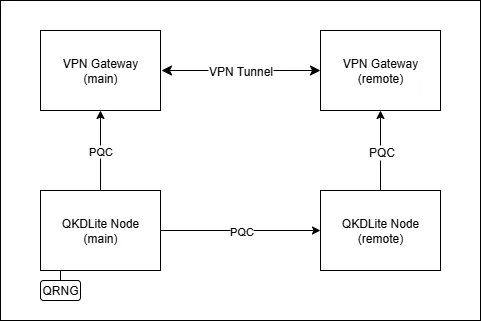
- Upgrading IPsec connections to support RFC 8784 with PQC (Quantum‑safe key establishment for VPNs and site‑to‑site tunnels.)
These upgrades mitigate HNDL risks without waiting for full enterprise migration.
Proposed Timeline
- 2026–2027: Identify high‑value data flows; upgrade external‑facing TLS endpoints.
- 2027–2028: Upgrade IPsec tunnels for critical infrastructure and inter‑site connectivity.
- 2028–2029: Expand PQC‑hybrid protection to all sensitive data‑in‑transit.
3. Start Cryptographic Discovery Using Automated Tools
You cannot migrate what you cannot see
Every regulation—from EO 14412 to FAR updates—requires organizations to inventory cryptographic assets and submit migration plans. The executive orders explicitly state that the bottleneck is not algorithm selection but knowing where cryptography lives across your systems .
CISOs should begin:
- Evaluating automated discovery tools (network scanners, binary analyzers, TLS/IPsec inspectors).
- Building internal capability to generate cryptographic inventory reports and PQC migration plans.
- Preparing for mandatory reporting to regulators, auditors, and sector‑specific authorities.
This process will take time—often 12–24 months—because organizations must test tools, validate accuracy, and integrate them into operational workflows.
Proposed Timeline
- 2026–2027: Pilot 2–3 discovery tools; evaluate coverage and cost.
- 2027–2028: Deploy enterprise‑wide discovery; generate first cryptographic inventory.
- 2028–2029: Produce formal PQC migration plans; integrate CBOM reporting.
- 2029–2031: Continuous monitoring and automated compliance reporting.
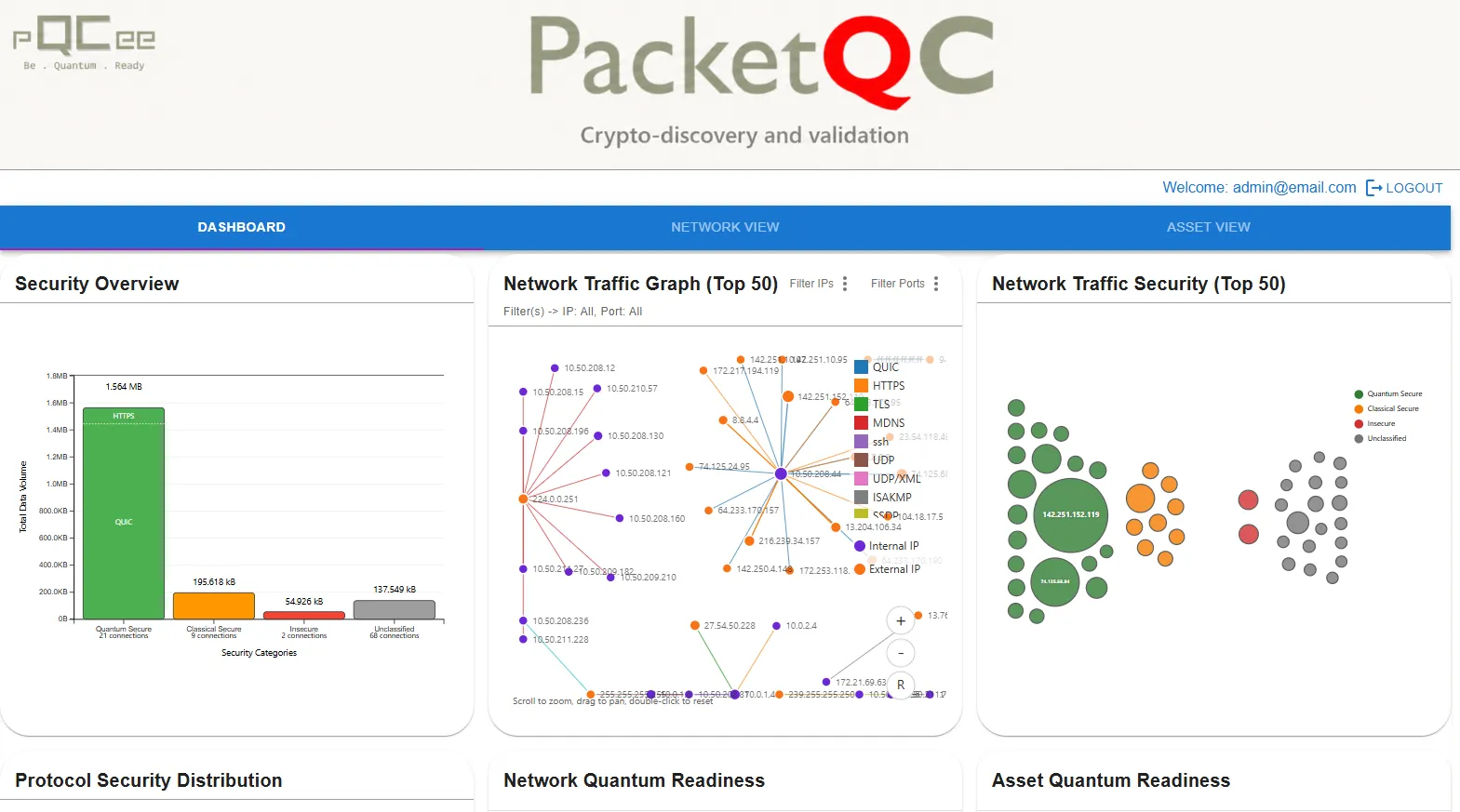
PacketQC by pQCee can be used carry out cryptographic discovery and CBOM generation in a matter of minutes.
Putting It All Together: Your Quantum‑Safe Readiness Roadmap
2026–2027: Foundation
- Update procurement policies
- Begin TLS/IPsec upgrades
- Start cryptographic discovery pilots
2027–2028: Acceleration
- Enforce PQC requirements for new vendors
- Expand hybrid PQC protection for high‑value data
- Deploy enterprise‑wide discovery tools
2028–2030: Execution
- Generate formal migration plans
- Replace non‑compliant systems
- Achieve PQC readiness for key establishment by 2030
2030–2031: Completion
- Transition digital signatures to PQC
- Finalize compliance reporting
- Establish long‑term crypto‑agility programs
Conclusion
The quantum threat is real, the deadlines are fixed, and the risk is already active. CISOs do not need to solve the entire PQC migration problem today—but they must begin the three foundational actions immediately and in parallel. By updating procurement policies, protecting high‑value data in transit, and launching cryptographic discovery, organizations build the momentum needed to meet the 2030–2031 deadlines and secure their long‑term quantum‑safe future.
This blog was written with the help of Microsoft copilot.